

Article Plan: Buddhism Explained by My Cats, Cassie and Colombine
Part 1: Introduction — The Living Room Temple, or When Wisdom Arrives on Four Paws
-
A. Buddhism: Religion, Philosophy, or Way of Life?
-
Demystification and global definition of a path to awakening without a creator god.
-
The importance of personal experience over blind dogma.
-
-
B. Meeting My Furry Spiritual Guides
-
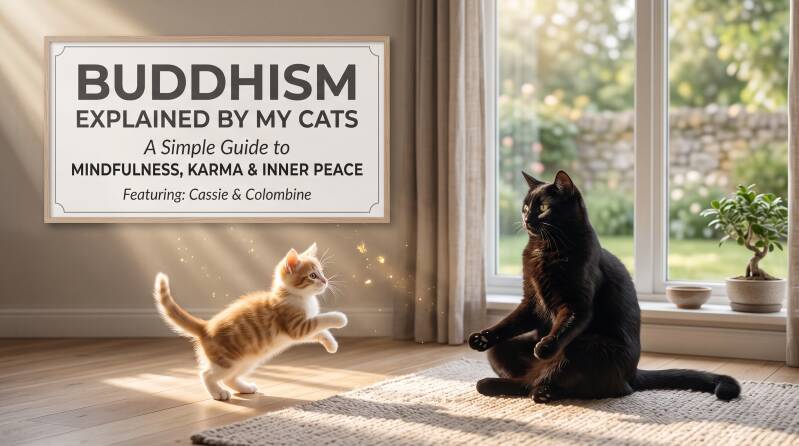
Cassie: The elder, portrait of a living room Buddha. Her Olympian calm, her ink-black gaze that seems to have pierced the mysteries of the cosmos, her embodiment of spiritual stability (Samatha).
-
Colombine: The novice, the pure energy of life. Portrait of a three-month-old kitten, curious about everything, dynamic, embodying the beginner's mind (Shoshin) and perpetual wonder.
-
-
C. Why Cats Are Naturally Buddhist Masters
-
Their innate relationship with silence, observation, the absence of pretense, and physical grounding.
-
Part 2: The Four Noble Truths Through Colombine's Eyes (Understanding Dissatisfaction and Change)
-
A. The First Noble Truth (Dukkha / Suffering or Dissatisfaction)
-
Buddhist definition of Dukkha: everything is subject to change, which creates a latent frustration.
-
Colombine's Anecdote: The drama of the elusive fly or the bottom of the food bowl reappearing. A kitten's distress in the face of temporary emptiness or a prey escaping, serving as a metaphor for our insatiable human quest for desires.
-
-
B. The Second Noble Truth (Samudaya / The Origin of Suffering)
-
Attachment (Upadana) and aversion (Dvesha) as causes of suffering.
-
The Cassie / Colombine Contrast: Cassie accepts that the sunbeam moves across the hardwood floor and calmly shifts. Colombine gets annoyed and tries to catch the shadows, fighting against reality as it is.
-
-
C. The Third Noble Truth (Nirodha / The Cessation of Suffering)
-
Finding peace through letting go.
-
The end of the struggle against the inevitable. How to find inner peace by ceasing to demand that the world adapt to our whims (the concept of Nirvana on a small scale).
-
-
D. The Fourth Noble Truth (Magga / The Middle Way)
-
Introduction to the Noble Eightfold Path as a practical guide for daily life.
-
The search for daily balance, far from extremes (neither harsh asceticism nor excessive indulgence in comfort).
-
Part 3: Cassie's Awakening: Meditation (Dhyāna) and Mindfulness in Daily Life
-
A. The Art of Still Sitting (Zazen) According to Cassie
-
Description of Cassie sitting on the windowsill, observing the rain or the wind in the trees without reacting.
-
How to settle into meditation: body posture, stability, seeking mental calm.
-
-
B. Purring as a Mantra: Conscious Breathing (Anapanasati)
-
Breathing as an anchor for the present moment. Cassie's regular, deep purring as a support for concentration.
-
Simple breathing practices to soothe the nervous system of stressed humans.
-
-
C. Mindfulness (Sati): Being 100% Present
-
Eating mindfully (compared to Cassie savoring her treat, closing her eyes in pure pleasure).
-
Walking mindfully (the silent and attentive walk of a feline placing each paw with infinite presence).
-
The contrast with our human mind, which constantly plans the future or ruminates on the past.
-
Part 4: Tornado Colombine: Impermanence (Anicca) and the Interdependence of the World
-
A. Anicca: Everything Changes, Everything Passes, and It Is Beautiful
-
Explanation of impermanence, a fundamental pillar of Buddhist philosophy.
-
The Metaphor of Colombine's Play: A cardboard box that excites her for an hour, then becomes an ignored object the next day. The impermanence of her kitten energy (the famous feline "zoomies" followed by collapsing into deep sleep).
-
Learning to savor each moment without clinging to it, knowing that it is unique.
-
-
B. Interdependence (Pratītyasamutpāda): The Cosmic Web
-
The Buddhist concept that nothing exists in isolation; everything is connected.
-
The Golden Dust Anecdote: Colombine observing a speck of dust in a sunbeam. For this moment to exist, it requires the sun 150 million kilometers away, the Earth's atmosphere, the clean window pane, the movement of air caused by Cassie passing by, and the kitten's curious eye.
-
-
C. The Absence of a Fixed Ego (Anatta)
-
Deconstructing the illusion of a rigid and permanent "Self." Being a constant flow of experiences, just like a kitten transforming day by day.
-
Part 5: The Karma of Kibble and the Ethical Compass (The Noble Eightfold Path of Our Felines)
-
A. Karma: The Law of Cause and Effect Explained Simply
-
Demystifying karma (it is not a divine punishment, but an imprint of our actions).
-
Living Room Karma: If Colombine knocks over a glass of water out of pure provocation, she is startled and gets her paws wet (immediate effect). If she gently rubs her head against my hand, she receives cuddles (positive effect).
-
-
B. Ahimsa and Compassion (Karuna): Respecting All Life
-
The ethics of non-violence. How to reconcile a cat's hunting instinct (Colombine watching a bird behind the glass) with our own practice of compassion.
-
Buddhism as an invitation to expand our circle of loving-kindness to all sentient beings.
-
-
C. Living with Rightness: Transposing the Eightfold Path into Our Daily Lives
-
Right Speech (meowing gently or purring softly rather than hissing needlessly).
-
Right Action and Right Effort (knowing when to act and when to rest, respecting one's physical limits like a cat).
-
Part 6: The Different Facets of Wisdom: From Theravada to Zen (The "Breeds" of Buddhism)
-
A. Theravada Buddhism: The Rigor of the Wise Old Cat
-
The Way of the Elders, focused on personal discipline and individual effort to achieve awakening (Arhat).
-
Analogy with Cassie's immutable routine, meticulously cleaning her fur every day at the same time with a monk's discipline.
-
-
B. Mahayana Buddhism and the Bodhisattva: The Cat Who Shares Its Cushion
-
The Great Vehicle, centered on the vow to help all other beings awaken before oneself.
-
Analogy with Cassie welcoming the little kitten Colombine right next to her to keep her warm and groom her, temporarily giving up her own peace out of pure tenderness.
-
-
C. Zen and Vajrayana Buddhism: Sudden Enlightenment and the Spirit of the Koan
-
Zen and the pursuit of direct enlightenment (Satori) through mental paradoxes (Koans) and raw simplicity.
-
The Cat Koan: What is Colombine's expression when she suddenly freezes facing empty space? Zen invites us to silence the mind to live the direct experience of reality.
-
Part 7: Conclusion — Becoming a "Buddha-Cat": A Guide for Our Modern Daily Lives
-
A. Synthesis of Cassie and Colombine's Lessons
-
Combining the calm and meditative depth of the adult (Cassie) with the kind, dynamic curiosity of the kitten (Colombine).
-
-
B. Practical Tips for Cultivating Your Own Inner Temple
-
Creating moments of silence at home.
-
Stretching mindfully in the morning (the famous feline stretch).
-
Looking at the world through a cat's eyes: without judgment, with presence and unconditional love.
-
-
C. Poetic Closing on Peace of Mind
-
A final image of my two cats sleeping curled against each other, forming a yin and yang of soft fur.
-
Add comment
Comments